
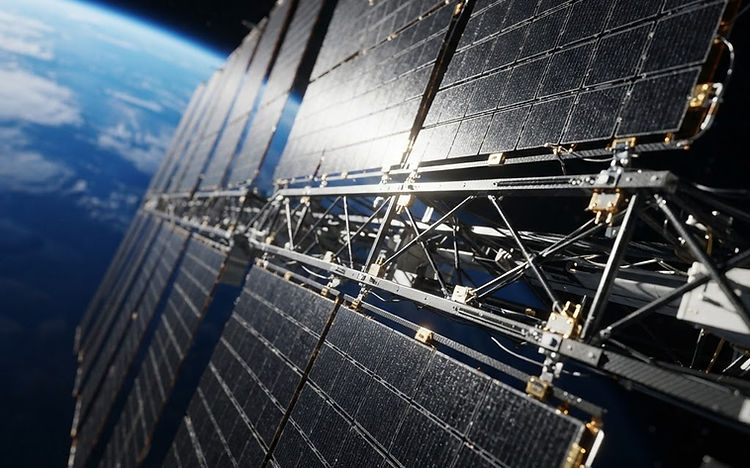
power
Sunlight without interruption.
Above the atmosphere a solar platform receives direct sunlight through most of its orbit. There is no cloud cover, no seasonal loss and no night side to bridge. For a facility limited by how much power it can secure on the ground, that changes the shape of the problem.
- sunlight through most of the orbit, with no weather in the way
- no night side to carry with storage
- heat leaves by radiation to deep space, without water
- siting does not wait on land, water rights or a grid queue
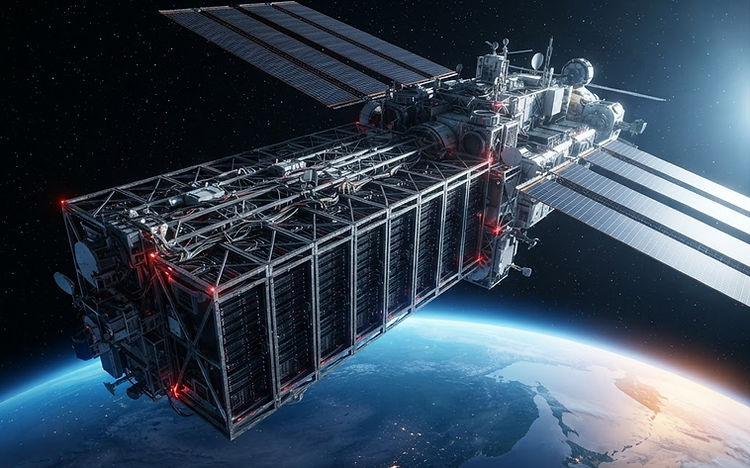
security
Independence from a single grid.
Terrestrial capacity depends on interconnection queues, fuel delivery, water and local policy. An orbital platform sits outside all of them. Its constraints become launch cadence and hardware, both of which can be planned and tested well before they are needed.
- no fuel to deliver and no pipeline to protect
- no dependence on one utility, one region or one queue
- supply measured in hardware and launches, both orderable in advance
- physical separation from terrestrial outages and local constraints
interest
Tell us you want to be on the list.
We are tracking who is planning for orbital compute and what would have to be true for it to work. Leave a name, a company and an email. We write when there is something concrete to share.